
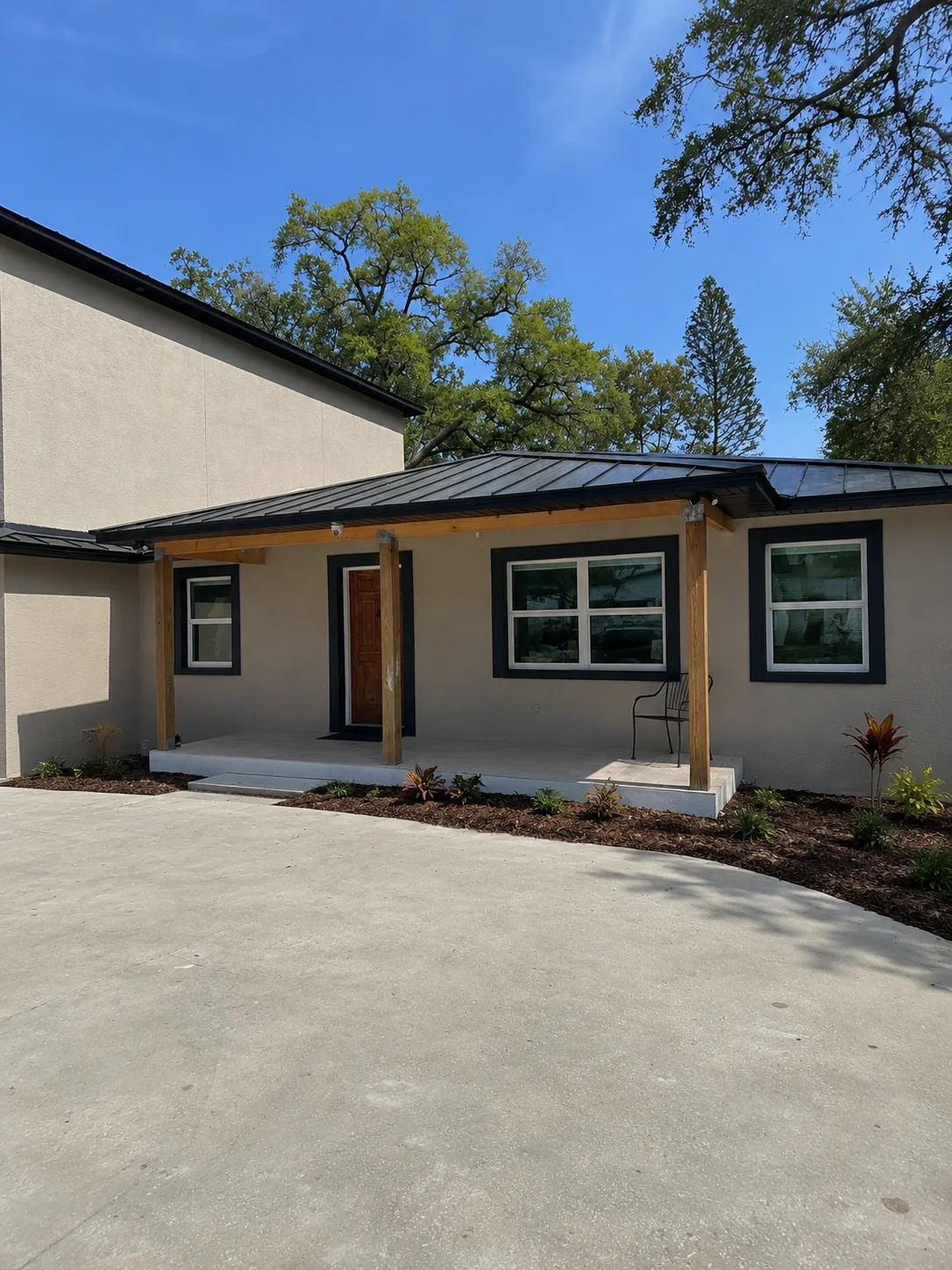

On a Tampa stucco house, the paint that lasts is a 100 percent acrylic: Sherwin-Williams Duration or SuperPaint. Elastomeric is a crack-bridge coating, not the default. Pick it only when the wall is dry and the cracks are hairline. The wrong film fails in the first rainy summer.
Westchase Painting Company paints stucco in Westchase, Carrollwood, and South Tampa. The product decision is the same in all three. The prep is what changes from house to house.
Three products, three jobs
| Product | Use it when | Skip it when | What it does |
|---|---|---|---|
| SuperPaint Exterior | The stucco is sound, the color is light, and the old film is still stuck | The wall is chalking hard or the color is dark | Standard acrylic. Two coats over a clean, primed wall |
| Duration Exterior | South and west walls, darker colors, or a house that faded early last time | You are trying to hide open structural cracks | Thicker acrylic film. Better color hold in Florida sun |
| Elastomeric | Dry stucco with a map of hairline cracks | The wall is damp, the cracks are wide, or the old elastomeric is already blistered | A thick coating that stretches over hairline cracks. It does not fix water behind the wall |
These are product roles, not a bid. The quote depends on how much film has to come off.
When elastomeric is the wrong call
Elastomeric looks like the Florida answer because the label says it bridges cracks. On a wet wall it does the opposite. Stucco holds water. A thick film with low perm rating slows that water from leaving. The coating blisters, the crack comes back wider, and the next painter has to grind it off.
We use elastomeric when three things are true:
- The stucco is dry after the wash.
- The cracks are hairline, not stair-step cracks at the corners of windows.
- The old coating is not a failed elastomeric that is already peeling in sheets.
If the crack is structural, paint will not close it. That is a stucco repair, then paint. Our stucco painting page is the job. This post is the product choice.
What actually makes the film fail
Florida sun fades dark colors first. A charcoal body on stucco can run past 160°F on a west wall. Duration holds those colors longer than a builder-grade acrylic. It still will not make a dark house cool. If the goal is a cooler wall, pick a lighter color. The color post covers palettes. This one does not.
Chalk is the other failure. Old acrylic turns to powder. If you paint over chalk, the new film sticks to the powder, not the wall. The wash has to remove it. Bare patches get primer. Two finish coats go on after that, not one heavy coat.
Flat finishes show mildew sooner on stucco. We use a low sheen, usually satin, so rain does not leave a dirt line under every sill.
HOA color is a separate step
Westchase and most Tampa Bay communities approve the color before the paint. The product can still be Duration or SuperPaint inside an approved color. Do not pick a color from a fan deck in the kitchen. Put a sample on the actual stucco and look at it in the afternoon. The Westchase HOA painting guidelines cover the paperwork. Exterior painting is the full repaint if the job is more than the stucco body.
What we do on a typical stucco repaint
We pressure-wash, scrape loose film, patch hairline stucco, caulk the joints that are open, prime bare spots, then spray and back-roll two finish coats. Back-rolling matters on textured stucco. Spray alone leaves thin spots in the texture. Those thin spots are where the next failure starts.
A one-story Westchase house is usually a few days of prep and two days of finish, weather permitting. July afternoons stop the work. Paint applied in a thunderstorm does not count as a coat.
Call (813) 320-8710 or request a free estimate if you want the wall looked at before you buy the paint.